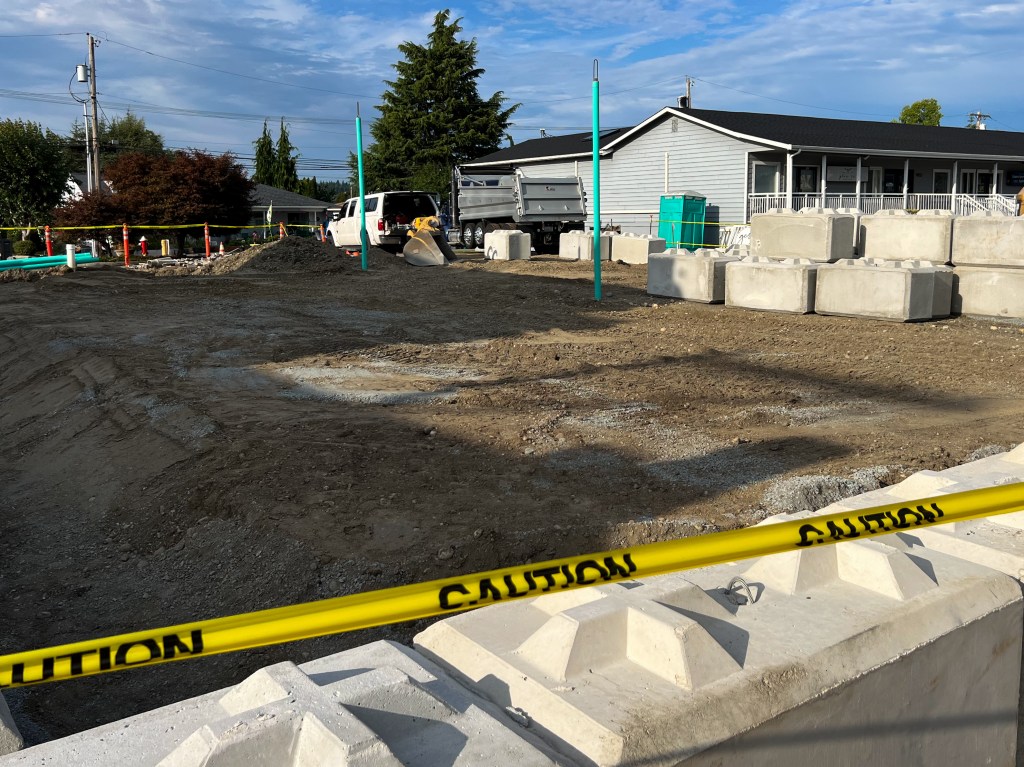
construction site in the beginning stages – photo: Carrie Meyer
Fronting the Brick Road……
is a square building envelope. It measures roughly 70 feet by 70 feet and is surrounded by concrete retaining structures supporting nearly twelve feet of preload fill.
Fronting the brick road…
is a slender vertical monitoring pole has been installed and is visible from the street. There are more through out the site.
These poles are…
part of a settlement monitoring system that extends upward above grade and deep below the buildable lot. The preload, monitoring system, and pole placements were engineered to measure soil compaction and settlement over time.
This work has been carried out by an engineering firm, in coordination with the architectural and a surveying teams, under the direction of applicable City codes and requirements.
moving and mashing the concrete blocks in place
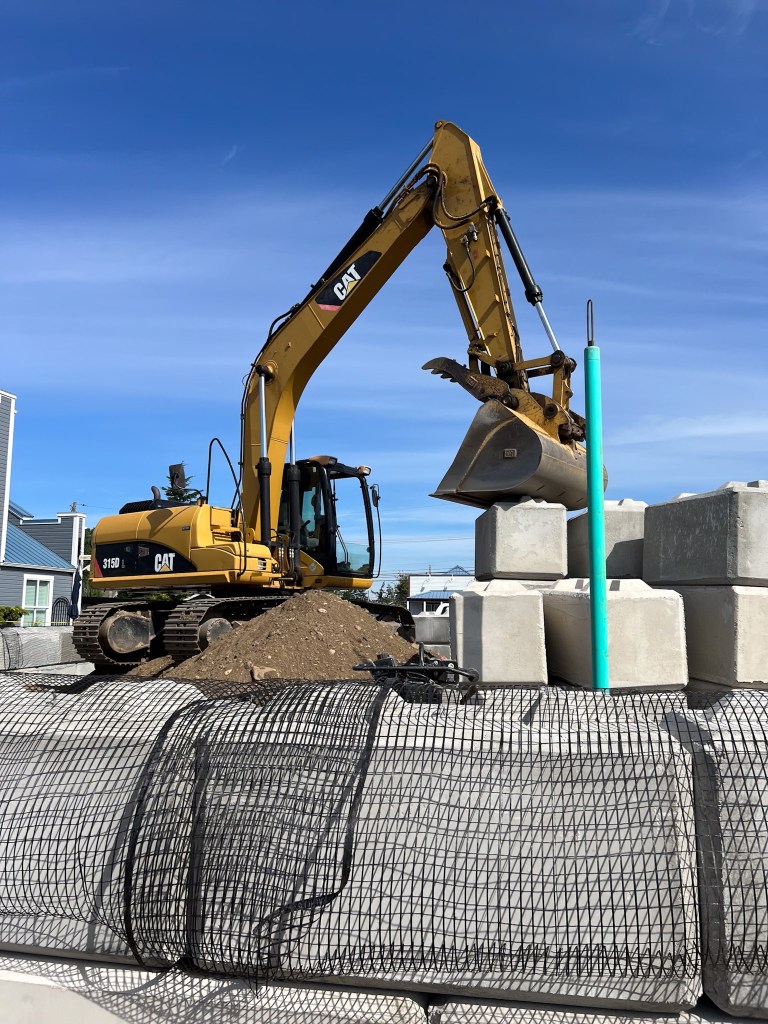
Construction activity along Stanwood’s Historic Brick Road in August, 2025 photo: Carrie Meyer
While the engineering work underway today focuses on stabilizing the soils beneath the site, the Brick Road, fronting the site reflects a much earlier chapter of Stanwood’s History.
A little History – The Brick Road
Before it was brick, this stretch of road would have been dirt — or in wetter seasons, mud. In the late 1800s and early 1900s, many small towns in Washington relied on graded earth or plank roads that deteriorated quickly in rain.
Around the early 1910s, Stanwood replaced that surface with vitrified clay paving brick. The bricks were most likely manufactured in western Washington, where large brickworks near Renton and along the Duwamish produced millions of paving bricks for roads throughout the Puget Sound region.
The bricks would have arrived by rail and wagon, then laid by hand over a compacted sand base. The road was carefully graded (arched) to direct water runoff, allowing the brick surface to drain and remain usable through wet seasons.
The change from mud to brick marked a shift toward durability and year-round reliability. More than a century later, portions of the early brick road can still be seen, having withstood over 100 years of weather, traffic, and change.
Additional history or corrections always appreciated.
 whatsgoingonhere.net
Leave a reply to Betty Cancel reply